Thank you, operator, and good morning, everyone. I'm joined today by Marty Stammer, our Chief Financial Officer. We shared 2 press releases this morning: one on our quarterly results and the second on the $25 million equity financing. We look forward to discussing both in today's remarks.
Our last earnings call took place at the start of the Heart Rhythm Society conference, where we were excited to share our innovation strategy and accomplishments. 3 months since then have been an amazingly energetic period. We've had the opportunity to engage with dozens upon dozens of electrophysiologists, hospital administrators and industry partners. Many visited our headquarters to view our Genesis robot and Stereotaxis Imaging systems first hand. The broad enthusiastic response validates that our innovation and strategic decisions were sound. Our plan is medically and commercially attractive. We are confident in our expectation for significant revenue growth in the years ahead.
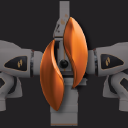
We have been busy readying ourselves for broad commercial launch of the Genesis robotic system. Internally, this is in -- this has involved preparing the right marketing and installation materials, training our sales teams, optimizing various aspects of product performance and working to ensure a smooth supply chain and inventory of system components. In Europe, where we have regulatory clearance for the full robotic lab solution, including Genesis and Stereotaxis Imaging, we've begun engaging with existing hospital customers on replacement projects and with new potential customers on building robotic EP labs.
In the U.S., we are advancing towards regulatory approval, ensuring that customers are aware of our innovation strategy and can plan accordingly. A purchase of a robotic system by a hospital requires multiple layers of hospital approval, lengthy contracts, coordination of construction schedules with local contractors, and in Europe, often a public tender submission. While there is a lot that needs to come together I am pleased with activity taking place at multiple hospitals.
In the third quarter, we expect to recognize the sale of a new Niobe robotic system to Overland Park Regional Medical Center, a part of our HCA Midwest Health. We expect in the coming months to be able to provide you with additional confidence that the replacement cycle opportunity for Genesis is real and that our innovation support robotic adoption by new customers.
On our previous earnings calls, I focused primarily on our innovation strategy and how it benefits patients, physicians and hospitals while also improving Stereotaxis' financial and strategic positioning. In parallel to our innovation efforts, we have been focused on developing the commercial infrastructure and processes to support the success of robotic EP programs. This infrastructure was a critical foundation from which to be able to thoughtfully engage with existing customers and attract new customers. I briefly mentioned some of these activities on previous calls, including increased quantity and quality of published clinical literature and modern web and social media presence, developing a hospital co-marketing toolkit, enhancing our network of field and remote clinical support and supporting the growth of the physician-led Society for Cardiac Robotic Navigation, among various others.
While development and refinement of this commercial infrastructure will be a continuous process, we are now in a position to share and use this infrastructure with our customers. I want to briefly discuss the robotic electrophysiology fellowship program as an example of a commercial initiative we are particularly proud of. It hopefully provides additional color on the longer-term impact these initiatives can have on the adoption of our technology.
Last year, we launched the robotic electrophysiology fellowship program as an optional educational program for fellows interested in robotics at hospitals with our technology. The program supplemented a standard 2-year electrophysiology fellowship with didactic simulator and procedure training to ensure proficiency in robotic magnetic navigation.
In addition to ensuring technical skills, the program was structured to create a global community of forward-looking fellows that can engage with each other and to provide fellows with a differentiated skill set to support their career growth post graduation. The fellowship program started gradually at a few hospitals. We have 10 robotic fellows graduate in the pioneering class of 2019. Of the 10, 7 have received full-time physicians or credentials to practice at hospitals with our technology.
We help to guide and support fellows as they evaluate the next step of their careers and ensure they have access to robotic systems after graduation. Two of the fellows will be starting physicians at hospitals where robotic system is currently significantly underutilized or idle. Graduates who move to hospitals without our technology are often engaged and supportive of adopting the technology at the new hospitals.
As awareness of the program spread, we have rapidly increasing interest. We now have over 40 fellows from 25 global hospitals enrolled in the class of 2020 and 2021 programs. Enthusiasm of younger fellows is often contagious, and we expect the program to help with our reengagement with pending physicians. These fellows are the future leaders in electrophysiology and our engagement and support as they start their career helps ensure that a new generation of physicians is confident in our technology and its clinical value. This program represents a significant upfront investment of energy and resources for Stereotaxis, with the primary benefit seen as the fellows graduate and help reinvigorate in existing sites -- reinforce existing sites, reinvigorate stalled sites or establish new robotic programs. Given our current modest global footprint, a program with dozens of fellows has the potential to meaningfully impact global adoption of robotics.
I want to comment on our second announcement this morning. The Stereotaxis has raised $25 million from a select group of leading health care-focused and growth-oriented institutional investors. On previous calls, I expressed confidence in our ability to execute our strategic growth plans and reach profitability without the need for additional financings. Nothing changed in that analysis. Following our announcements at HRS, we observed substantial interest from sophisticated investors who shared our excitement for the positive impact our technology can have in medicine and for our near- and long-term growth opportunities. While shareholder dilution is something we do not take lightly, this financing provided multiple benefits that we determined would enhance shareholder value.
First, this financing will support our effort to reintroduce Stereotaxis into the community of high-technology, publically traded companies. We expect an uplifting to a national exchange to be achievable in the near term. Our products have new high-quality institutional shareholders and are pleased to have established a relationship with Cowen.
Second, a strong balance sheet will accelerate and support our commercial growth activities. Our existing sales team is lean and its size does not do justice for our substantial market opportunity. While I'm confident the existing teams will be able to successfully commercialize our Genesis robotic system and next-generation ablation catheter at existing customers, we have limited bandwidth to focus on the 99% of the electrophysiology market. It is not currently robotic.
Increased sales from our innovations at existing customers can more than double our annual revenue. There's a real opportunity is that Stereotaxis has less than 1% share of a $4 billion and growing market. Given the clinical benefits of our technology, every electrophysiology lab should have a robotic system. This financing will allow us to thoughtfully expand our global commercial teams and execute on that opportunity.
Third's, we have shown our capacity for meaningful innovation at Stereotaxis despite limited financial resources. This financing will allow us to initiate earlier and advance more rapidly multiple undisclosed innovation projects. I classified these projects into 2 general categories: a second wave of innovation in electrophysiology and novel applications for robotic magnetic navigation in interventional medicine. These projects will not have near-term impact on revenue, but are expected to have highly attractive IRRs to fuel future market share growth in electrophysiology and to create additional pillars of value for Stereotaxis outside of electrophysiology. I look forward to sharing additional updates as appropriate.
I want to make one additional comment on the financing. In the last couple of years, we have advanced significant innovation and commercial activities in a highly efficient and capital constrained manner. Financial prudence is part of our DNA. We will invest in the projects, infrastructure and team that improves patient care, enhances the physician experience and drives shareholder value. We remain committed, however, to financial prudence.
We are grateful for the trust and confidence of our new investors. Stereotaxis is being rebuilt on a new foundation that is more strategically sound and financially attractive. This has been done in a methodical, thoughtful fashion. The rebuilding has to take place in a stepwise approach, but we now advance along that path with significantly more strength and flexibility. We're confident in our vision of the future where robotics in electrophysiology specifically and endovascular surgery more broadly will be far more acceptable and prevalent. We are confident in our ability to positively transform endovascular surgery with robotics.
Marty will now provide some commentary on our financial results, and then we will open the call to Q&A.