David Fischel
Analyst · Cowen
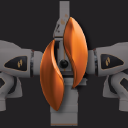
Thank you, Operator, and good morning, everyone. I'm taking today's call from the Heart Rhythm Society's annual conference in San Francisco. Yesterday evening, at the conference, we had the opportunity and pleasure of sharing publicly for the first time Stereotaxis' innovation, strategy and accomplishments. The positive reaction and energy was powerful. We shared these announcements this morning in press releases for the investment community. I want to focus today's call on describing these innovations as they represent the primary drivers of Stereotaxis' clinical, commercial and strategic transformation. I'm also particularly delighted that after two years of talking about innovation in a vague and general manner, we can tangibly showcase what we have been working on. For the last several earnings calls, I've consistently repeated a comment that Stereotaxis is advancing an innovation plan that is elegant, realistic and medically and commercially sound. I promised that the strategy will benefit patients, physicians and hospitals while also meaningfully improving Stereotaxis' financial opportunity and strategic positioning. These statements should all be amply supported by our announcements this morning. Stereotaxis has successfully developed a next-generation robotic system that is the first large leap forward in robotics magnetic navigation technology since Stereotaxis launched its first system in 2003. Stereotaxis has taken increased responsibility and is now directly offering customers a private label x-ray system that is tightly integrated with the robotic system. Stereotaxis is developing a next-generation magnetic catheter and has achieved tangible progress in development to date. And as we announced earlier this year, Stereotaxis implemented an open mapping API and mapping integration with Acutus as a way to broaden access to mapping ecosystems in the industry. We are advancing these innovations decisively and prudently. Our announcements today are not theoretical. They are very tangible and will positively impact the medical community and Stereotaxis in the coming quarters and years. Let me spend some time on each technology individually, starting with the robot system itself. The Niobe robotic magnetic navigation system was first introduced in 2003. It was science fiction to believe that magnetic fields could be harnessed to navigate catheters. But the dream was successfully translated into reality and the robotics system didn't just work, it worked well, allowing for catheter precision, stability, reach and safety that was otherwise unimaginable. Since then, for 16 years, there's been iterative improvements that simplified procedure set-up, provided some more aesthetic covers and addressed system responsiveness. These improvements were all iterative though. The core architecture, the magnets, the way they are moved and the superstructure around them remained stagnant. Stereotaxis Genesis, our next-generation robotic system, is a leap forward. It represents the future of robotics electrophysiology. Genesis is fundamentally a new beginning. We have completely redesigned the magnets and the way they are manipulated. We're providing the differentiated benefits of Niobe but in an architecture that is faster, smaller, lighter and more flexible. By using smaller magnets that rotate along their center of mass, we have a system that provides for instantaneous responsiveness. Across a broad range of navigational routine, the Genesis System was 70% to 80% faster than the current Niobe epic system. The entire system is significantly smaller and designed to improve the patient experience while on the operating table, provide physicians and nurses with greater access to the patient during the procedure and increase space in the labs for an enhanced work environment. The magnets are held on flexible and rugged robotic arms, greatly increasing the potential range of motion of the system. With appropriate regulatory approvals, this should allow to tighten the magnets in positions to generate stronger magnetic fields for increased catheter performance. It allows for wider x-ray angulation. It serves as a platform on which potential future ventures in new endovascular anatomies are possible. Across all aspects of the systems, motors, electronics, hardware and software, we have incorporated modern technology to support our overarching effort of improving performance, reliability and size. We are proud to have successfully achieved CE mark for the system, and it is now available for commercialization in Europe and certain other geographies. We will pursue additional regulatory clearances in the coming months to allow for a broader commercial launch. Our robotic system is not the only large capital equipment required in robotic electrophysiology lab. Stereotaxis' robotic technology has until now only been available in conjunction with x-ray systems provided by two large firms. This duopoly was not always a healthy ecosystem for our hospital customers. It led to duopoly pricing and to limited technological progress. X-ray has become less and less critical in electrophysiology, and that gave us confidence to pursue directly offering an advanced x-ray system to our hospital customers. We are proud to be able to offer the electrophysiology community, Stereotaxis Imaging Model S, an advanced x-ray system specifically designed for electrophysiology, tightly integrated with Genesis and also compatible with Niobe. This system was developed in collaboration with the Omega Medical Imaging, a U.S.-based x-ray manufacturer we are pleased to be working with. Stereotaxis Imaging is a step forward clinically. It incorporates the newest flat panel detector technology to support radiation reduction and clear image quality and includes a broad range of features, including beam collimation, adjustable frame rates, variable SID and more to support radiation reduction and good image quality. The primary benefits of Stereotaxis Imaging, though, are structural and strategic. The benefits of robotics in EP are significant and should be broadly accessible and affordable. By providing Genesis and Stereotaxis Imaging in a combined fashion, we have significantly reduced the cost of acquisition, the ongoing cost of ownership and the complexity of installation of a robotics electrophysiology practice. In the -- in a bundles fashion, we can now offer a full robotic EP practice for the price of a high-end biplane x-ray on its own. This is a type of affordability that no other robotic system in any surgical specialty offers. We will provide all the services, architectural planning, installation and ongoing servicing and maintenance of the technology in a bundled fashion, making the experience more efficient, pleasant and cost-effective. The size, weight and space requirements of the combined systems are dramatically less than Niobe with other x-rays, allowing for robotic EP lab to be installed in labs previously never considered possible. Genesis and Stereotaxis Imaging would -- has each individually been highly exciting. In combination, we have dramatically transformed the accessibility of robotics in electrophysiology. We're providing improved clinical performance with an improved customer experience and improved cost-effectiveness. These innovations will enable a return to a more robust effort to grow new system sales. It will support the replacement cycle at just our existing hospital customers of approximately $15 million annually. But more importantly, it's the first step towards a future in which every electrophysiology practice will have access to a robotic system. We still need to receive FDA clearance for the Genesis system, and there are still some work to be done to optimize the supply chain for various components as disciplined rollout initially in the EU will allow us to make sure that the first installs are perfect experiences for our physician and hospital customers. Subsequently, we will more aggressively pursue full commercialization. The other significant innovation announcement I want to discuss today is that Stereotaxis is developing a proprietary, next-generation magnetic ablation catheter. I'm highly excited by our efforts here and believe the impact of this innovation will be very significant as it advances towards clinical use. While catheter innovation is long overdue, I want to place this development in the right context. Hundreds of peer-reviewed publications have documented the clinical value of the existing magnetic ablation catheters being offered by Johnson & Johnson. The clinical outcomes, both safety and efficacy, from those publications are very positive, even when the magnetic catheter is compared to the most modern, manual catheters. The differentiated capabilities and profile of a magnetic catheter navigated by magnetic fields has intrinsic advantages of safety, stability, precision and reach. We are pursuing innovation not because the current offering is flawed but because we can take something great and make it that much better. We're still in the development stages. And so for a variety of reasons, the prudent thing is to keep my comments broad. We've entered into a collaboration with Osypka, one of the early pioneers in electrophysiology with significant expertise and impressive capabilities in catheter design and manufacturing. The next-generation magnetic ablation catheter is being developed with three primary design considerations: improving the capabilities and performance of the radiofrequency ablation tip, improving the quantity and placement of magnet material in the catheter to improve navigation efficiency and ensuring an open ecosystem design that can accommodate use within various mapping environments. There are additional terms of our collaboration that are not being disclosed but provides for attractive potential strategic options in the future. The benefits for patients and physicians of a more modern ablation catheter are significant. There are other financial and strategic benefits. Using just our existing global procedure volume, we estimate a proprietary ablation catheter generating over $20 million in incremental high-margin annual revenue for Stereotaxis. Using the existing market of cardiac ablation procedures, our own catheter increases our addressable global market opportunity by over $2 billion. The increased performance of the catheter should fuel increased utilization and market share gains. Increased magnetic material in the catheter tip may also serve to advance other meaningful innovations in the future. Development timelines are always difficult to estimate. But we've already developed initial prototypes of the catheter, and it is possible that we could enter clinical use and commercial launch in European geographies in the latter half of 2020. The clinical and regulatory task for the United States needs to be determined but will likely take an additional couple of years. I'm proud that we have been able to advance our various innovation initiatives in a financially prudent manner. We have a good team at Stereotaxis that is able to accomplish significant interdisciplinary technological achievements. We have established collaborations with a broad range of industry partners, some communicated publicly and several still confidential. We are highly excited by our progress to date and the path ahead of us. The innovations described today are only the initial act. We are committed to continuous innovation, and there's much more I know we can and will do in subsequent stages. It is a longer-term, multiyear strategy, but we will continue pushing forward in a decisive fashion to increase the capabilities of robotics and decrease the barriers to adoption of robotics. I'm confident that in the future, every EP lab will have a robotic system. Physicians will be focused on the important cognitive aspects of EP and will leave the mechanical aspects to the machine. Marty will now provide some commentary on our financial results, and then I will make a few financial comments before opening the call to Q&A.