Jan Haverhals
Analyst · Maxim Group
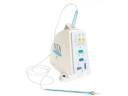
Thank you, David and thanks to everyone for joining us today. I'm pleased to report that we achieved solid financial results in 2023 with revenue increasing 12% to $9.8 million. We also reported an increase in gross profit of 39% for the full year 2023 to $6.8 million and I'm especially proud to report that our dental operating income increased by 90% to $2.1 million in 2023. This strong margin improvement and improved profitability within our Dental division was due in large part to our streamlined operations and the success of our new portal for selling and shipping the FDA single-tube anesthesia system and hand pieces directly to Dental Clinics and Dental Service Organizations or DSOs within the U.S. We achieved solid growth despite 2023 being a transitional year, having terminated the agreement with a prior distributor Henry Schein at the end of 2022. We also terminated all nonexclusive agreements with other distributors in the U.S. in September 2023. We didn't make that decision lightly. And in hindsight, this was the right decision. I'm confident our new strategy is working and anticipate enhanced benefits from this transition to a direct model in 2024. Establishing a closer and more direct relationship with our dental customers has not only improved margins but has also allowed us to do a much better job selling and providing outstanding customer service which has led to much greater stickiness and repeat orders within existing clients. Since the launch of the portal, we have been able to track sales data and conduct sales analysis. We now know the customer's identity and purchase patterns, enabling us to really improve sales execution with existing customers and reactivate dormant customers in the U.S. In addition, we have implemented educational programs to enhance the customer experience as well as maximize the relationship over time. This direct relationship allows us to provide the necessary training and ongoing support to ensure continued usage by dentists and hygienists. Importantly, this approach has proven effective within individual practices, Dental Service Organizations and large group practices. The direct sales model provides greater interaction with the customer and higher level support for both large and small practices. In turn, this has helped attract premier customers. For example, we added main Dental Group to our growing roster of Dental practices which includes 21 practices across the Northeast and United States. Additionally, we commenced direct sales to Meridian Endo Imperial or large endodontics, periodontics and implant dentistry practice with 3 offices in Wisconsin. This includes the deployment of the FDA in needs of their operatory rooms and across all the endodontists and periodontists within the practice. These latest agreements illustrate the benefits of our new sales strategy and our ability to cost effectively scale the business by adding large dental practices. We also believe that having such prestigious large group practices will help shorten our sales cycle and enable us to aim at further penetration of the DSO and large group practice market going forward. We are clearly executing our new sales strategy with a much leaner sales organization, allowing us to enhance our margins and maximize profitability. We are also rolling out a variety of marketing initiatives to drive greater awareness of our technology among dental practices nationwide. Specifically, we have engaged in more direct-to-consumer marketing. These activities have resulted in leads from dentists, contacting us directly to order our instruments because patients requested them to do so. We will continue to increase our marketing efforts with dedicated campaigns directly targeted at patients. While our international sales pulled back slightly, this was largely due to the timing of orders, certain distributors working through inventory and our focus on the domestic markets. We also made a decision to pull back from China until market conditions improve. That said, we expect to resume solid international business heading into 2024 and continue to add new international partners which should support our global expansion strategy. On a final note, we are on track with our next-generation dental instrument and look forward to unveiling it in the near future. It's also worth reminding everyone that our Dental division continues to operate profitably. As I mentioned earlier, the Dental business generated over $2.1 million of operating income which is a 90% increase over the same period last year. So to summarize, within our Dental business, through our new direct sales strategy and our increased marketing efforts, we aim to further grow our Dental business in the coming quarters. As we continue to grow our revenues, we expect to benefit from economies of scale as well as the recurring nature and high margins on our disposables. Turning to our Medical division. We are also advancing the rollout of our CompuFlo Epidural System. Specifically, we have made significant progress in penetrating key hospitals, health care systems and pain management clinics. We are also witnessing existing customers expand their use of CompuFlo, an important example is UTMB Health Clear Lake Campus Hospital which has commenced use of the CompuFlo beyond labor and delivery to now include neurostimulation spinal cord stimulator implantation procedures, illustrating the versatility and broad potential of our instrument. The spinal cord stimulator is an implanted device that sends low levels of electricity directly into the spinal cord to relieve pain. An estimated 60,000 spinal cord stimulators are implanted each year. This implies a potential company revenue of $18 million alone in this segment. We need to remind ourselves that the total market of epidural injections is $11 million [ph]. Assuming a 20% penetration in this market that is the equivalent of $80 million in net profits on the consumables for the company on an annual basis. Approval and adoption of the technology for neurostimulation spinal cord stimulator implantation followed a successfully evaluation process by Dr. Patrick Karas, a full-time faculty Neurosurgeon at UTMB, who operates at both the Galveston and Clear Lake campuses. Dr. Karas completed 10 cases using CompuFlo, in which he reported 100% clinical success and no complications. I'm pleased to report that further expansion of our technology at UTMB is underway. CompuFlo has proven to be of tremendous assistance in performing spinal cord stimulator cases. Specifically, CompuFlo helps to minimize the risk of intraoperative cerebral fluid leakage and trauma to underlying nerve routes, both potential complications of spinal cord stimulator procedures. Cerebral fluid leakage can require a postoperative blood patch which while nerve root irritation can cause severe reticulitis requiring extended postoperative admission and postoperative steroid injections. CompuFlo has also decreased operative time, one of the major hospital cost drivers by around 20 minutes per procedure according to clinicians feedback. Most recently, we commenced sales of CompuFlo Epidural disposables to Omaha Pain Physicians, a comprehensive medical pain management center in Omaha, Nebraska. This approval follows an extensive trial and evaluation by Dr. Matthew Stottle, its Founder and Medical Director. Dr. Stottle completed 10 cases using CompuFlo at Omaha Pain Physicians, in which he reported 100% clinical success. Evaluation included epidural steroid injection procedures within the lumbar, thoracic and cervicothoracic junction of the spine. As more and more physicians and anesthesiologists perform procedures and submit for reimbursement, our goal is to secure coverage for our technology as we continue to execute on our goal of establishing CompuFlo to become the standard of care in epidural analgesia. I'd now like to take a moment to provide an update on our reimbursement strategy. We are making good progress in advancing our broad reimbursement strategy through a carefully staged approach. We are working closely with key pain management providers in the use of the new CPT tracking code for accurate and timely CompuFlo claims submission. Additionally, we are providing support to the clinical facilities for each individual claim to have an appropriate response. We have established sites across the U.S. that are actively utilizing CompuFlo and submitting claims to payers across the country. Rather than spreading ourselves thin by bringing on too many hospitals and paying clinics before reimbursement approval, we realized it was better to focus on working closely with a handful of pain clinics and provide them the necessary professional support to help ensure positive payer reimbursement. We are supporting these clinicians utilization of the CompuFlo across a variety of use cases which is important in demonstrating widespread utilization of the technology. Use of our system by these providers follow successful evaluation periods by the clinics and physicians. In each case, they reported 100% success with zero dural punctures. I'm pleased to report that our clinical sites have submitted claims for over 45 patient procedures in the first 3 months of 2024 alone which is nearly half of the claims we submitted in all of 2023. All claims submitted to date using the CPT 0777T code have been uploaded by payer systems for processing. Claims are being submitted to Medicare as well as commercial payers. We are encouraged by the high level of claim activity that is being generated by pain management providers which provides milestone the opportunity to indirectly engage with payers to educate them on the CompuFlo technology and helping build support for the appropriate level of reimbursement from insurance providers. Review and analysis of 100 claims data indicated that roughly 1/3 of claims have already received payment. More than half of these payments were paid by commercial payers followed by Medicare. Moreover, we have initiatives underway that we believe will help build support for broad reimbursement of the CompuFlo. Clinicians have the opportunity to engage with Medicare jurisdictions prior to final payment position of the jurisdiction. Turning to the international front. We are expanding our network of distribution partners for CompuFlo. In November, we announced a distribution agreement with Bioline Supply to distribute the CompuFlo and disposables across Spain. Spain represents an important market for us with a population in excess of 48 million people and a growing number of epidural procedures each year in pain management and anesthesiology. Overall, we are targeting independent distributors with existing relationships within key global markets and proven track records of introducing medical devices within their territories. We look forward to announcing additional partners as we expand our global footprint. We also believe there is a market opportunity for CompuFlo within federal and other government agencies as our system can contribute to both improved patient outcomes as well as increased efficiency. As we have discussed in the past, we are advancing initiatives following SEM approval and work closely to secure approval within the federal supply schedule. FSS approval would open up the sizable government market. So to summarize, we are continuing our efforts to seed the market with our technology among key physicians which we believe will ultimately translate into adoption. We remain committed to our goal of establishing the CompuFlo as the new standard of care in epidural anesthesia by providing patients with effective pain relief while reducing the risk of complications. At this point, I'd like to turn the call over to Keisha Harcum, Vice President, Finance, to go over the financials in detail. Please go ahead, Keisha.