Jan Haverhals
Analyst · the Maxim Group. Anthony, your line is live
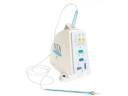
Thank you, David, and thanks to everyone for joining us today. We achieved revenues of $2.1 million for the third quarter of 2023. However, these results do not reflect the true underlying improvements in the business. Most notably, domestic dental sales increased by 45% due to the early success of our new online store for selling and shipping the STA, single-tooth anesthesia system, and hand pieces directly to dental offices and dental groups within the United States. We achieved these results while moving away from our former distributor, Henry Schein and thus an important validation of our strategy. Even more notably, the new direct selling model has resulted in an increase in gross profit for the third quarter of 2023. In fact, our gross profit margins increased from 66% for the third quarter last year to 73% for the third quarter of this year. We achieved growth in our domestic revenue and margins despite a small sales team, which shows the potential of our new business model. And while we could spend more to bring on more sales representatives, our focus for the time being is on maximizing profitability with a streamlined operating structure. In addition to higher margins, this strategy has provided us a closer and more direct relationship with our customers, thereby increasing our stickiness with the dentists allowing us to do a better job selling and improving customer service. In other words, based on the obtained customer identification and purchase patterns, we can now focus on the basic principles of sales execution, being new customer acquisition, developing existing customers, waking up so-called sleeping or dormant customers and upselling activities. At the same time, we have engaged in more direct-to-consumer marketing. These activities have resulted in leads from dentists, contacting us directly to order our instruments because patients requested them to do so. We will continue to increase our marketing efforts with dedicated campaigns directly targeted at patients. Given the domestic traction, we are expanding our efforts to enter new international markets and deepen our penetration within existing international markets. While international sales declined, it's important to note that orders from third-party distributors can be lumpy due to the timing and the size of the orders. Nevertheless, our international pipeline remains solid, and we expect our international sales to resume growth. We also look forward to announcing the addition of new international partners, which should support our global expansion strategy over the coming quarters. It's also worth noting that our Dental division continues to operate profitably. In fact, the Dental division generated over $458,000 of operating income on a stand-alone basis, which is a 48% increase over the same period last year. So to summarize, we believe that through our new sales strategy, in combination with our increased marketing efforts, we aim to further grow the Dental business at attractive margins in the coming quarters. As we continue to grow our revenues, we expect to benefit from economies of scale as well as the recurring nature and high margins on our disposables. Turning to our Medical division. We have made significant progress rolling out our CompuFlo Epidural System. Specifically, we have added a new distributor and expanded adoption of the CompuFlo technology in a prominent hospital system and pain management clinics. Towards this end, we commenced sales of CompuFlo Epidural disposables into Island Ambulatory Surgery Center in Brooklyn, New York. Adoption of the technology by this clinic follows a successful evaluation process by its founder and Medical Director, Dr. Leon Reyfman, an interventional pain medicine physician. Sales to Island Ambulatory Surgery Center represent the company's first foray in the ambulatory surgery center market, an addressable market of more than 9,000 centers across the U.S. Dr. Reyfman was one of a team of four doctors who completed 18 cases using the CompuFlo Epidural System in which they reported 100% success. The evaluation included Epidural selection procedures within the lumbar, thoracic and cervical thoracic junction of the spine. Additionally, we are working closely with a major hospital system to expand use of the CompuFlo beyond labor and delivery to now include use with neurostimulation spinal cord stimulator implantation procedures. The CompuFlo Epidural System has proven to be of tremendous assistance in performing spinal cord stimulator cases. Specifically, CompuFlo helps to minimize postoperative complications of spinal cord stimulator implementation. These complications include intraoperative cerebral fluid leakage and trauma to underlying nerve routes. Cerebral fluid leakage requires a postoperative block patch as well as radiculitis cases that require extended postoperative admission and postoperative steroid injections as a potential complication of this procedure. It has also decreased operative time for the surgery by around 15 to 20 minutes per procedure according to the clinician's feedback. As more and more physicians and anesthesiologists perform procedures and submit for reimbursement, our goal is to secure growth coverage for our technology as we continue to execute on our goal of establishing the CompuFlo Epidural System as a standard of care in epidural analgesia. During the third quarter, we reported an important milestone, reimbursement from commercial payers for patients who were involved in motor vehicle accidents. We are now building on this success and making continued progress advancing our reimbursement strategy. Specifically, we are supporting clinicians' utilization of the CompuFlo Epidural System across a variety of use cases, which is building support for the appropriate level of reimbursement from insurance providers. These physicians have reported back on claims activities for their payers, and we are encouraged by the feedback from the insurance providers. I'd now like to take a moment to discuss our reimbursement strategy in more detail as this is really critical to understanding our overall strategy and the outlook of our Medical business. Significant progress has been made in three important areas related to reimbursement. One, provider utilization of CompuFlo. Secondly, claims submissions for CompuFlo and last but not least, acceptance of the CompuFlo new CPT code by health care payer systems for claim processing. We have established advisory sites across the U.S. that are actively utilizing CompuFlo and submitting claims to payers across the country. This is important in demonstrating widespread utilization of the technology. To date, physicians have submitted a total of 87 claims to their respective payers using our tracking code to identify the use of CompuFlo technology when used with an epidural steroid injection, primary procedure CPT code, also called the primary code for epidural steroid injections. If you recall, the American Medical Association assigned this CPT code, our code as an add-on code to be used in conjunction with one of the eight existing epidural steroid injection codes. We are on target to meet our projection of over 100 claims submitted before the end of the year to payers across the country. Claims are being submitted to Medicare as well as commercial payers. Additionally, some clinicians have submitted claims for motor vehicle accident patients. And as we reported previously, three commercial payers have responded to these claims submissions and paid for it. I'm encouraged that health care payer systems appear to have our code loaded into their systems and the code is accepted for claim processing versus a claim rejection because the code is not recognized. Category III codes like ours are designed for tracking utilization of new and emerging technologies. The submission of claims by our providers and recognition of the Category III code by the payers is an important positive step along the journey to positive reimbursement for CompuFlo, which will drive further commercialization of the CompuFlo Epidural System. Our advisory physicians are beginning to report back on claims activities from their payers. There is a wide range of responses, and I'm very happy to report that the mix of responses have been exactly as anticipated. Some of the payers are asking for more information about the CompuFlo because it is new to them. Others are covering based on their established policies. While there have been denials reported rest assured, all denied claims are being appealed through each payer's individual appeals process. Denials are expected as part of establishing utilization and payment for a new code. Moreover, the high level of claim activity that is being generated by our advisory sites is providing an opportunity to engage with the payers to directly educate them on CompuFlo technology and the unmet patient need the technology serves. So to summarize our reimbursement progress, we are on target to deliver on our original plan to drive utilization by supporting our advisory clinicians in claims submissions, with over 100 claims expected to be submitted by year-end. Additionally, we are providing support for each individual claim to have an appropriate response. Finally, the increase in utilization provides Milestone the opportunity to engage with payers to directly educate them on CompuFlo technology. Turning to the international front. We are expanding our network of distribution partners for CompuFlo. Most recently, we appointed a premier distributor in Spain, which we look forward to announcing in the near term. Spain represents an important market for us with a population in excess of 48 million people and the growing number of epidural procedures each year in pain management and anesthesiology. Overall, we are targeting independent distributors with existing relationships within key global markets and proven track records introducing medical devices within their territories. We look forward to announcing additional international distributors as we advance our commercial rollout. We also believe there is a market opportunity for our CompuFlo Epidural Instrument within federal and other government agencies as our system can contribute to both improved patient outcomes as well as increased efficiencies. As we have discussed in the past, we are advancing initiatives following SAM approval and working to secure approval within FSS, the federal supply system. At this point, we believe it's not a question of if, it's a question of when. FSS approval would open up the sizable government markets. With this goal in mind, we are doubling down on our efforts to penetrate the DoD and government markets. We were recently invited to present at the International Healthcare Summit, which took place last week in Kyiv Ukraine. The event was an initiative by the U.S. Department of Defense in which they invited companies like ours that bring new technologies to collaborate with the Ukrainian Ministry of Health and Hospitals. We are advancing these initiatives with the DoD whereby we could conduct trials in the Ukraine using our technology, which would be funded by the DoD. In addition to the humanitarian aspects of our work, we believe this would be an ideal opportunity to fortify our relationship with the DoD by highlighting the safety and efficiency of our technology. So to summarize, we are continuing our efforts to seed the market with our technology among key physicians, which we believe will ultimately translate into widespread adoption. We remain committed to our goal of establishing the CompuFlo Epidural Instrument as the new standard of care in epidural anesthesia by providing patients with effective pain relief while reducing the risk of complications. At this point, I'd like to turn the call over to Keisha Harcum, Controller, to go over the financials in detail. Please go ahead, Keisha.