Leonard Osser
Chief Executive Officer
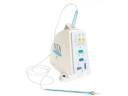
The product has already proven itself both in our clinical study, independent clinical studies, and in the field. So, at this point, we are finding no pushback whatsoever on the quality of the product and that it does what it’s supposed to do. Keep in mind that the studies that we have done thus far are with the most difficult patients by KOLs, in other words high BMI, high body mass, which of course every woman in labor has, also with rescues when a doctor inadvertently poses a wet tap, the needle goes beyond the epidural space and punctures the membrane that surrounds the spinal column that creates morbidity. So, there has to be a rescue, there has to be blood pooled and a blood patch given over that. Our device is proven by doctors to be far more efficacious in doing that on the standard of care, especially in these very difficult patients. So the proof of the instrument and the technology is already there and well accepted with doctors in various parts of the world, including the United States. So, the next thing that has to happen is simplicity of the product, because you are dealing in a very fast-moving environment. A woman is in labor, they want to move as quickly as possible. So, we are at the point now where we have quite a bit given the amount of injections we have given of end user feedback where we are making certain modifications to the product to simplify the product’s setup. As far as the usage goes, that’s accepted, there is no changes that will be implemented in the usage, but simplicity in the setup of the product. The next area that we have to get through is the economics of the product. So, our model is at the beginning to go into the area of training. When you are training people on the ground, you have a professor sitting next to the resident and the resident is advancing the needle into a woman that is in labor, that’s our first target market for epidurals. So, the professor really doesn’t know where the tip of the needle is. And so, in the first case, it’s quite often while you are teaching the residents in this environment that they will believe that they are in the epidural space prior to being in it and will inject the drug prior to reaching the epidural space and have no effect of anesthesia. That’s the first issue, and that’s a very frequent event with new residents. The other issue which is far more dangerous and creates the morbidity is, when they are in the epidural space, they don’t realize it. So, the professor sitting next to the resident is really, I guess, we would call it flying blind because they don’t know where the tip of the needle is, because the thumb is the instrument of pressure flow feedback, and the thumb being used is the resident’s thumb. What we do is we allow the professor to know because of our instrument exactly where the tip of the needle is. So, in the first instance, it makes a very tense situation for both the resident and the professor far better for them. It makes it – it gives great confidence to the resident far faster than using the traditional method from 1860, and obviously far safer for the patient. So, we believe that our target market at the beginning is to get to the institutions which teach residents, because it’s quite obvious what our product can do there. And from there, we move on to using the product and hopefully get to a point of having the product be standard of care. The other issue is, of course, economics, that we cost a lot of money, that we add money to the system, which could be very problematic, in fact, it’s the opposite. If you look at our product in distribution, the model will be to the distributor based on us – an agreed upon usage by the institution, the distributor will purchase the instrument from us, but he’s a landlord give it to the institution, so there’s no capital cost or sell it to them at a price below where it would go to a capital cost committee. So that barrier is no longer there. If you look at the cost and we don’t have final analysis on this though we do have an analysis through IBM and we’re working on an analysis now with another institution, it’s – a stay in the hospital due to a puncture or wet tap is on average seems to be 2 days. So, if the mother has to stay an extra 2 days due to this morbidity so does the new-born. The average cost in the United States for this is $12,000 – is $3,000 a day, so that would be $12,000. Then by our law in the United States, another anesthesiologist has to do the – has to go in, do another epidural and close the hole that was created, which is creating the morbidity as full blood in order to do so, that is the rescue. So that adds significant cost to the institution, which is now – which they are now responsible for their own medical errors. So, if you look at an institution that has these costs, which does not include cost of litigation, which is significant, but these direct costs, the costs may be anywhere between $12,000 and $20,000. We don’t know yet, but the cost is significant. So, if they are in a normal facility with residents that let’s assume that’s $1 million cost, if they purchase from us 300,000 disposables and use our product for all their epidurals, they will save $700,000. They will also add significantly to that rating as far as safety goes as an institution and practice what we believe will become the standard of care. So, we are now in the process – the very long answer to your question, we are now in the process of no longer proving the products’ efficacy that’s already proven. We are now proven that the hospitals to bake it part of their system at least at the beginning for training residents. Does that answer your question?