Leonard Osser
Analyst · Maxim Group. Your line is now live
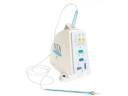
Thank you, David. And thanks, everyone, for joining us on the call today. Considering that we just had a conference call on May 5, I'll try to keep this call short, providing more time for your questions. As we indicated on our last call, we continue to witness growing interest in the new CathCheck system, which is now in a pilot at a leading medical institution in the United States. CathCheck marks a technological leap forward in both the capabilities and intellectual property surrounding the CompuFlo epidural system, adding another 20 years to our patent protection. This capability makes CompuFlo the first and only known commercially available instrument that can identify the presence of a pressure waveform signal that can be used to confirm proper placement of a catheter anywhere in the body. This can be accomplished in an objective way in seconds as opposed to using the conventional subjective method, taking between 20 and 40 minutes. Using CathCheck, physicians and nurses can not only determine what is the objective pressure at the tip of the needle, but can now monitor the presence or absence of a pulsatile waveform – that's a heartbeat – to determine the placement of the catheter. Importantly, this capability saves time and money and provides much better patient care. A major university hospital, familiar with CompuFlo, was attracted to our new CathCheck technology, given its ability to minimize contact between the patient and provider, which is especially important during the COVID-19 pandemic. Specifically, the doctors and nurses have been handling patients with the virus and they immediately recognize that the less you handle patients, the less you are subjected to the possibility of contracting the virus or transmitting the virus. Within a short period of time, we delivered the instrument and the disposables. We are now in a pilot program and they are actively using it on patients. The feedback thus far has been quite positive. It's worth noting that the extended use of the CathCheck post epidural procedures means potentially many more disposables used by the hospital during the course of the patient's stay. It is also important to note that the market for CathCheck could go way beyond the epidural market. As long as the catheter is placed in the body where a pulsatile wave form exists, we can read the heartbeat. We believe that our technology can be applied to a broad array of areas within the body. We have begun exploring other possibilities for the use of CathCheck in other parts of the body. Last week, we announced an important study which was published in the Open Journal of Anesthesiology. This study further validates the ability of the CompuFlo CathCheck system to safely and accurately identify the location of the needle or catheter in the epidural space. Publications such as these serve to highlight the benefits of our technology, which should help drive adoption among anesthesia providers. We believe that CathCheck can significantly reduce both time and cost of this procedure, while providing pain management far more effectively and quickly to the patient. We also recently announced the successful implementation of a Quick Start pathway into the epidural system. The Quick Start pathway simplifies and provides an alternative to reduce the procedure preparation time for the CompuFlo instrument prior to the procedure. This was very important given the feedback from many anesthesiologists throughout the United States. In addition, we are exploring ways to make the use of our disposables more efficient, and we will be providing an update when we achieve this milestone. Last month, we announced the completion of the first economic study of CompuFlo for use within labor and delivery, which validated the cost savings of the system versus a traditional loss of resistance technique. As I mentioned on our last call, by way of example, from this study, if a hospital has 12,000 births per year, it would be reasonable to assume that institution would save over $6 million per year using our product exclusively. There is no question the economics favor our product versus the prior [indiscernible], which, as you know, was invented in the 1800s using a technique developed in 1921. This is the first major study to clearly validate the cost benefits of the CompuFlo epidural system, and was the final phase in advancing our commercial rollout. Having completed obtaining support from key opinion leaders as well as receiving patents and regulatory approval in the United States and many other countries, we are now poised to begin our commercial rollout. Over 2,000 injections have been completed to date and I'm pleased to report all of these procedures performed with our CompuFlo epidural instrument have had no complications. Had it not been for COVID-19 and the fact that hospitals are on complete lockdown, we believe we would have already announced several important commercial agreements. Nevertheless, we are working every day towards that goal. Turning to our dental business, we saw a decrease in sales of approximately 6% due to the current COVID-19 pandemic and the reduced hours and closings of dental offices throughout the country and the rest of the world. We anticipate that our revenue for the second quarter, and quite possibly the third quarter, will be affected. Nevertheless, we are encouraged by the gradual reopening of businesses in certain states, and we are hopeful that dental practices will start to pick up soon. At this point, I'd like to turn the call over to our CFO, Joseph D'Agostino, to go over the financials in detail, but I will be back at the conclusion of Joseph's discussion. Please go ahead, Joseph.