Glendon French
Analyst · Bank of America
Thanks, Brian. Good afternoon, everyone, and welcome to our third quarter 2020 earnings call. Here with me today is Derrick Sung, our Chief Financial Officer.
Before I get started, I'd like to thank 2 important groups of people: first, our pulmonary and critical care customers around the world who have been on the front lines combating COVID-19; and second, the entire Pulmonx team that has persevered through and delivered during this particularly challenging time across the country and in the pulmonary space in particular. Thank you all.
As many of you are aware, this is our first earnings call since we completed our IPO and listed on NASDAQ in October. Before I begin, I'd like to say thank you to all who participated in the offering, which raised approximately $201 million in net proceeds to the company; and to those of you who have invested in the company since. With your support, we are now well positioned to take the next steps in our journey toward establishing ourselves as the global leader in minimally invasive treatments for lung disease. While we had the chance to tell our story to many of you through our IPO process, I'll start today's call with an introduction to Pulmonx and our platform solution before moving on to cover our recent updates and vision for the future.
Pulmonx is a commercial-stage medical technology company that provides a minimally invasive treatment for patients with severe emphysema, a form of chronic obstructive pulmonary disease or COPD. Our platform solution, anchored by our Zephyr Endobronchial Valve, treats patients who despite medical management are still profoundly symptomatic and either do not want or are ineligible for surgical approaches.
As background, emphysema accounts for approximately 25% of all COPD patients and is a debilitating and life-threatening disease. More specifically, it progressively destroys lung tissue, resulting in a diminishing ability to breathe and engage in the most basic daily activities, leading to a high mortality rate.
From a market perspective, approximately 3.8 million patients in the United States were diagnosed with emphysema as of 2018, of roughly -- of which roughly 1.5 million had severe emphysema. Of these 1.5 million severe emphysema patients in the U.S., we estimate that approximately 500,000 patients would qualify for treatment with our Zephyr valves. After taking into account an additional roughly 700,000 Zephyr patients outside the U.S., we believe our global addressable market is approximately $12 billion. This represents our opportunity today and does not account for any additional patients who we may be able to treat in the future with technologies under development.
We expect to capitalize on this significant addressable market because there is an urgent clinical need for a safe, effective and minimally invasive solution for patients with severe emphysema, and this is what our platform offers. Current treatment options include either medical management and pulmonary rehabilitation, which are noninvasive but limited in their efficacy, or the more invasive treatments of lung volume reduction surgery or complete lung transplantation, which bring with them significant morbidity and mortality, and thus, are simply not an option for most patients with severe emphysema.
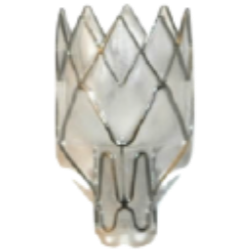
Our solution is comprised of the Zephyr Endobronchial Valve, the first FDA-approved implant to reduce hyperinflation associated with severe emphysema, the Chartis Pulmonary Assessment System and the StratX Lung Analysis Platform. Zephyr valves are indicated for bronchoscopic treatment of adult patients with hyperinflation associated with severe emphysema in regions of the lung that have little to no collateral ventilation.
During the onetime bronchoscopic procedure, the valves are placed in the airways to occlude the most diseased parts of the lung, allowing trapped gas to escape until the target lobe is reduced in size. The intended result is a reduction in lung volume and hyperinflation in the target lobe, thereby allowing healthier parts of the lung to expand and take in more air.
The StratX platform and the Chartis system are treatment planning and patient identification tools designed to enhance outcomes with our solution. StratX facilitates the analysis of existing CT scans to help identify target lobes and to plan the Zephyr procedure. Chartis is used to effectively simulate the procedure immediately ahead of valve placement and to definitively identify the patients most likely to benefit from this treatment. It does this by determining the presence of collateral ventilation, an exclusionary criterion that is naturally present in approximately 50% of people.
Using these tools together is the best way to identify and treat patients who will most likely benefit from Zephyr valves. These patient assessment and treatment planning tools represent a significant competitive advantage, and we believe they will allow us to establish our platform as the standard of care for the treatment of well-selected patients with severe emphysema because they enable us to deliver better average outcomes.
Consistent results across 4 randomized controlled clinical trials and over 100 scientific publications demonstrate that patients selected with the Chartis system and successfully treated with Zephyr Valve show clinically meaningful and statistically significant improvements in lung function, exercise capacity and quality of life compared to medical management alone. As a result, Zephyr valves have been indicated in the treatment guidelines for COPD worldwide.
The quality of evidence for treatment with endobronchial valves has been graded A by the Global Initiative for Chronic Obstructive Pulmonary Disease, widely known as GOLD. Further, the United Kingdom's National Institute for Health and Care Excellence, also known as NICE, has included our treatment as part of standard measures for COPD and recommended all qualifying patients be evaluated for eligibility. The consistent and significant results of our clinical trials have enabled us to establish reimbursement in major markets, and this furthers our confidence in our ability to execute.
In the U.S., roughly 75% of our patient population is covered under Medicare, which pays for our medically necessary solution. The remaining 25% of our patient population is covered by commercial plans. Here, we have made significant progress in securing positive coverage decisions with national commercial payers such as Aetna and Humana. Most recently, Health Care Services -- Health Care Service Corporation, the second largest Blue Cross Blue Shield plan, covering 16 million members across 5 states, issued a positive coverage policy for the Zephyr Valve effective November 1. SelectHealth, a health plan serving 900,000 members across 3 states also recently issued a positive coverage decision for our treatment. In all, we are very pleased with where we stand in terms of reimbursement and believe this is not a significant barrier to adoption of our treatment at this time. For perspective, even payers without positive policies have generally been approving pre-authorization requests for our technology in more than 90% of cases.
Outside the United States, our solution is covered by major health systems across Europe and Asia Pacific. In the last 2 years, we materially improved our reimbursement situation in Austria and Germany and established national reimbursement in Belgium and France. Just last week in the United Kingdom, a commissioning decision was published by NHS England that enables access to routine funding for our Zephyr Valve treatment in experienced treatment centers. This decision is based on advice of doctors, health experts and patient and public representatives, further cementing the recognized clinical benefit of our procedure. It is noteworthy that the NHS England decision is specific to the design of our Zephyr Valve and does not apply to other valves of different design.
Finally, just earlier today, the Scottish Health Technologies Group, a national health technology assessment agency that provides evidence support and advice to NHS Scotland on the use of new health technologies, published a report recommending endobronchial valves be made available to all eligible patients in Scotland.
Now that I've provided some background on the platform and the market, I'll shift to an overview of our commercial approach. For perspective, the Zephyr Valve is now commercially available in more than 25 countries, including the U.S. Over 80,000 valves have been used to treat more than 20,000 patients globally to date. The U.S. market lends itself to a particularly efficient commercial model, given the relatively small number of U.S. hospitals and leading pulmonologists that are high-volume interventionalists. We believe we can serve substantially all of the patients in the U.S. with just 500 centers of excellence, which represent less than 10% of all U.S. hospitals. And as of the third quarter, we've already begun procedures in 135 of these target accounts.
We are creating an entirely new market. To fully unlock the opportunity, we have 3 key elements to our commercial strategy. First, we have to train new physicians and open new hospitals, setting them up in a way that they can scale easily. Second, we have to coordinate -- we have a coordinated playbook to work with the physician champion and their hospital to reach out to local community physicians with high concentrations of COPD in their practices and build awareness and referral networks. Third, as we get these elements in place, we leverage geo-targeted digital and social media to bring patients into the conversation and help them to advocate for themselves. We've been piloting this approach in specific geographies and have already seen a tremendous growth in interest. While we do not see direct-to-patient as essential to our near-term success, we believe that health care will continue to become more patient-driven and see this as an important component of long-term growth.
From a global perspective, we sell primarily through a direct sales model with more than 90% of sales through our 70 sales representatives around the world. As of the end of September, we had 42 sales reps in the U.S. and 28 sales reps focused on our international business. We find that our value proposition resonates with both providers and patients across the world, particularly because the platform is a new service line with potential economic benefits for hospitals. The procedure is emotionally rewarding for physicians given high procedural success and limited alternatives.
Chartis and StratX allow physicians to select patients who are most likely to benefit, which improves the likelihood of positive results. And the procedure's minimally invasive nature translates to fewer complications and quicker recovery versus invasive alternatives. Collectively, these factors have all played a role in driving our success.
Turning to our results. We were very encouraged by the strong rebound of Zephyr Valve procedures in the third quarter following the significant drop in sales that we experienced in the second quarter when our business nearly ground to a complete halt during the initial weeks of the COVID pandemic. Our worldwide sales of $10.6 million in the third quarter represent the highest quarterly sales we've achieved to date. We saw continued signs throughout the third quarter that the underlying clinical need for our treatment is durable and that a recovery in our business is underway. For example, since the onset of the pandemic in the second quarter, there continues to be strong interest from new accounts in adopting our treatment, and we've opened 21 new accounts during this time period. We have also seen StratX reports -- report activity largely return to pre-COVID levels in the third quarter, and we have seen a resumption of inbound patient calls into hospitals and into our reimbursement support service.
We believe these indicators are representative of the underlying demand for our treatment and validate the significant unmet need that we are addressing for severe emphysema patients who have limited alternatives. That said, we remain cognizant that our business is uniquely sensitive to the impact of COVID. Our procedure requires a 3-night inpatient stay. Our pulmonologist customers remain at the forefront of the COVID response, and our patients remain at high risk from this virus given their weakened respiratory status. Accordingly, we expect that COVID will continue to impact our business over the next few quarters, and we remain cautious against the current backdrop of increasing COVID cases and regional and national lockdowns across the globe. Nonetheless, despite COVID-related headwinds and the underlying demand in our business gives us strong confidence that we will see a relatively quick return to pre-COVID activity across our accounts once the pandemic subsides.
Looking even further ahead, we remain focused on our key strategic priorities designed to fuel our growth. First, we plan to continue expanding our commercial organization by recruiting and training talented sales professionals to drive adoption of our Zephyr valves within our existing markets. Next, we intend to continue opening new accounts in the U.S., collaborating with leading hospitals and physician champions to build emphysema centers of excellence. And finally, we're focused on promoting awareness of our Zephyr Valve therapy through the training of referring physicians and the education of patients.
Longer term, we are investing in new technologies to broaden the patient population that can be treated with our products. As stated earlier, Zephyr valves are an effective treatment in patients who have near or complete divisions between the lobes in their lungs, and thus, little to no airflow between the lobes. We refer to these patients as being collateral ventilation negative or CV negative. However, nearly 50% of patients with severe emphysema are collateral ventilation positive and thus are not candidates for Zephyr valves.
For these CV-positive patients, we have commenced clinical research of AeriSeal, a polymeric foam that is delivered via a bronchoscope to a targeted region of the lung as a possible treatment for CV-positive patients. This patient population is incremental to, and nearly the same size as, the population we are able to treat with Zephyr valves and thus represents a significant potential increase to our total addressable market.
Together, we believe these commercial and product development initiatives will help us build on our success to date and enable us to fully realize our goal to be the global leader in minimally invasive treatments for lung disease.
With that said, I will now turn the call over to Derrick Sung, our CFO, to provide a review of third quarter results.